Your Competitor Just Got an AI That Reads Half a Billion Documents Before Breakfast
Last Tuesday, a friend who runs a mid-size logistics company told me he spent three days researching whether to expand into cold chain shipping. He read analyst reports, pulled up competitor earnings calls, dug through trade publications, and still felt like he was guessing.
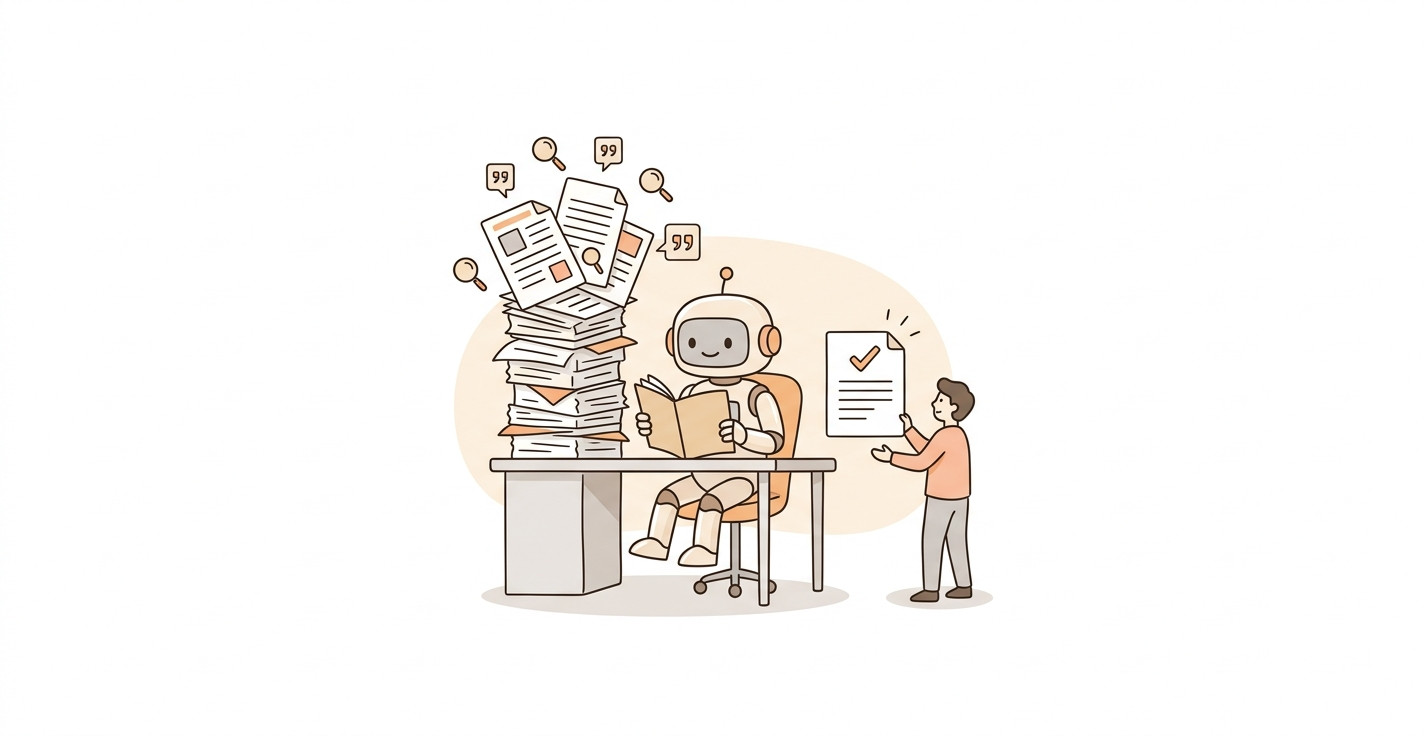
On the same day, Accenture announced a strategic investment in AlphaSense, a platform that does all of that in seconds. Across 500 million documents. With citations.
If you haven't heard of AlphaSense, you're not alone. But 90% of the S&P 100 use it. Every top global investment bank runs it. And as of this week, Accenture is embedding it directly into the AI workflows they build for clients across finance, healthcare, tech, and energy.
The numbers tell a bigger story
AlphaSense just crossed $600 million in annual recurring revenue. They raised $350 million at a $7.5 billion valuation. And in April, Gartner named them the leader in competitive and market intelligence platforms, ranking highest in both execution and vision.
Forget startup hype. This is a company with 7,000 enterprise customers paying real money because the product works.
Why this should worry you (a little)
Accenture surveyed C-suite leaders and found that 78% now see AI as more valuable for growing revenue than for cutting costs.
That stat matters more than the headline. The biggest companies in the world have moved past the "use AI to save money" phase. They're using it to make faster, better-informed strategic decisions. And they're paying companies like AlphaSense to be their research department running nonstop in the background.
For a business owner or COO running a 20-person team, this creates a real problem. Your larger competitors can now digest more market information in an afternoon than your team can process in a month. They're spotting trends, tracking competitor moves, and making strategic calls with AI-verified data while you're still searching through Google results.
Why citations change everything
I talk to business owners every week who tell me they've tried using ChatGPT or Claude for market research. And most of them say the same thing: the output is interesting but they don't trust it enough to act on it.
That's the gap AlphaSense fills. Every insight comes with a citation. You can trace it back to the actual earnings call transcript, SEC filing, or expert interview. That changes the conversation from "AI says we should do this" to "here's the data, here's the source, here's the decision."
Accenture is now building that capability into what they call "agentic workflows." In plain English: AI systems that don't just answer questions but actively monitor your competition and flag opportunities before you even think to ask.
What to do about it
You probably can't afford AlphaSense. The platform targets large enterprises, and the pricing reflects that. But the principle applies at every scale.
Start treating competitive intelligence as a repeatable process, not a once-a-quarter exercise. Set up alerts, track your top five competitors systematically, and build a habit of checking in weekly.
Look at the AI tools you already have. Most business owners use maybe 10% of what's available in their existing subscriptions. Before you buy something new, figure out if your current setup can handle basic market monitoring.
And pay attention to the direction. The companies investing billions in AI right now aren't building better chatbots. They're building decision engines. When those capabilities trickle down to mid-market tools (and they will), the business owners who already have a research habit will adopt faster than the ones starting from scratch.
The competitive edge is shifting. Speed still matters. Cost savings are real. But the next advantage belongs to whoever makes the best decisions with the most complete information, the fastest.
Accenture just bet serious money that AI is the way to get there. They're probably right.
— Mark Garza, Laimen AI

