An AI Agent Cut Data Onboarding From Weeks to Days. The Secret Was the Review Loop.
Last Monday, Northern Trust and Microsoft quietly announced something that most AI headlines will ignore: an AI agent that converts messy client data into a standardized format. No chatbot. No copilot branding. Just a tool that reads years of historical investment data and reformats it so humans can check it faster.
That's it. That's the whole thing.
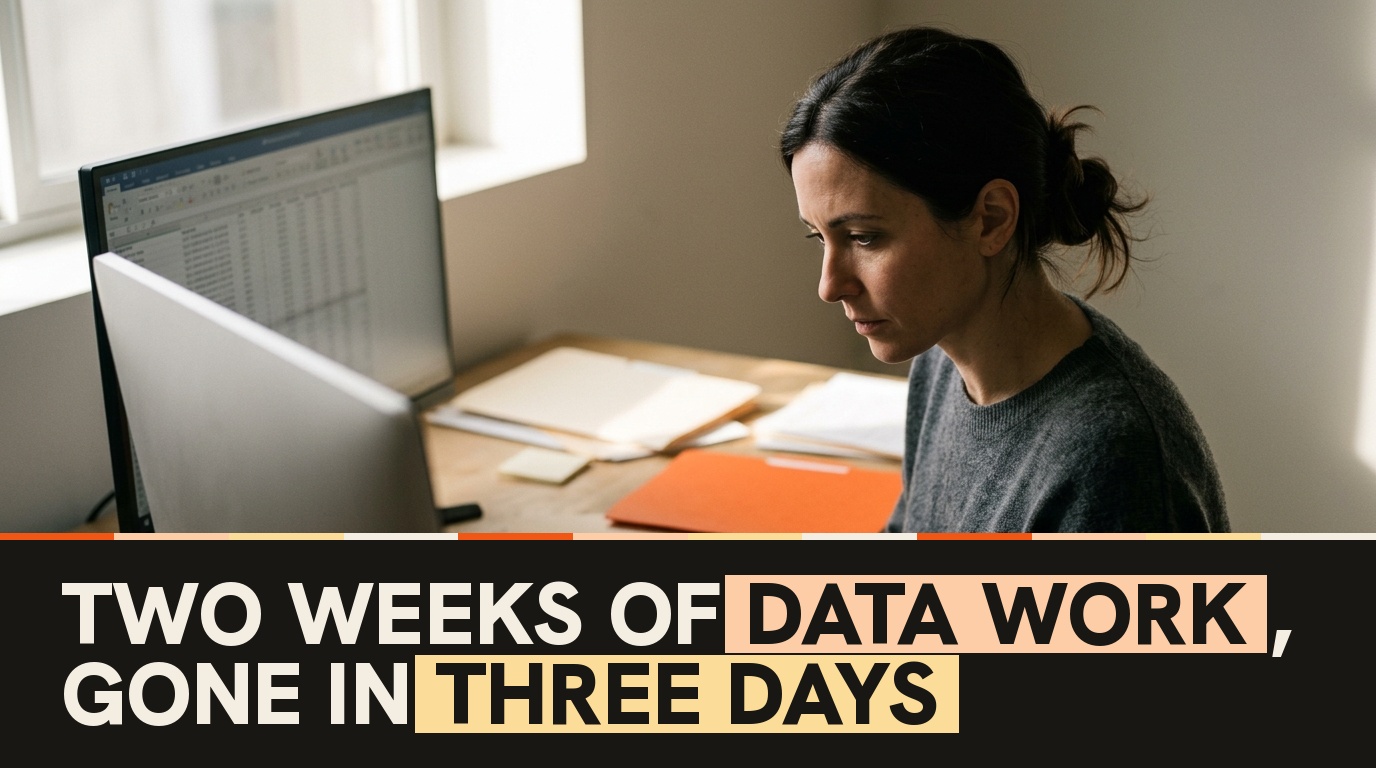
And it cut data preparation time by 83%. From two and a half weeks down to three days.
What Actually Happened
Northern Trust's asset servicing arm handles onboarding for institutional clients. Big pension funds, endowments, that sort of thing. Every new client comes with years of investment history in whatever format their old system used. Analysts used to spend weeks manually converting that data into Northern Trust's reporting format.
The new agent, built on Microsoft Azure and Foundry, reads those messy historical workbooks and spits out standardized reports. Analysts review the output in Excel and SharePoint. They catch errors, flag exceptions, and feed corrections back into the system. On seven anonymized test cases, the agent hit 96.5% accuracy on its first pass.
The numbers sound impressive. But the story that matters is the operating model behind them.
The Pattern Worth Stealing
Northern Trust didn't build a system that replaces analysts. They built one that drafts the boring part so analysts can focus on catching problems. The agent runs during implementation, before any client data goes live. Every output gets human review.
This is the part that translates to businesses outside institutional finance.
Think about how many hours your team spends reformatting data when a new client comes on. Maybe you're pulling records from a previous CRM. Maybe you're converting spreadsheets from a client's old accounting system. Maybe you're standardizing inventory data from a supplier who uses a completely different naming convention.
Same shape every time: messy input, known output format, and a person who checks the work.
Northern Trust surveyed asset owners and found that 57% said consolidating data from different sources was their biggest challenge. I'd bet the number is similar for any service business that onboards clients with existing data.
Why This Matters More Than Another Model Release
The AI news cycle loves model launches. Bigger benchmarks, faster inference, shinier demos. Most businesses don't need any of that right now. They need a specific tool that does one tedious thing well, with a human checking its work before anything goes live.
That's what Northern Trust built. A conversion tool with a review loop. Nothing flashier than that.
You could build something similar with existing AI tools today. The components are off-the-shelf: a language model that reads structured data, a prompt that maps fields between formats, and a spreadsheet where a human reviews the output. Designing the review process so errors get caught before they cause real damage, that's where the actual work lives. The AI part is almost boring by comparison.
The Honest Caveats
A few things to keep in perspective. These are vendor-reported numbers from a press release. Northern Trust measured the 83% time savings against its own prior workflow. The 96.5% accuracy comes from seven test cases with anonymized data. Small sample.
This also lives inside a regulated institutional workflow with compliance requirements that forced them to build the review loop. Your business might not have that same regulatory pressure to keep humans in the process. But you should do it anyway. The review loop is what makes the whole thing trustworthy.
The Takeaway
If you onboard clients from messy legacy data, you already have the use case. Agent drafts the conversion. Human checks it. Corrections feed back in. The time savings come from the review loop, not from removing the human.
Northern Trust spent months building this with Microsoft's engineering team. You could prototype the same pattern with a well-structured prompt and a spreadsheet by Friday.
Start there.
Source: Microsoft News, November 9, 2026
— Mark Garza, Laimen AI

