$242 Billion Poured Into AI Last Quarter. Most of It Went to Four Companies.
Last week I sat down with a founder who'd just closed a $1.2 million seed round. He was thrilled. Then I showed him the Crunchbase numbers from Q1 2026, and his face changed.
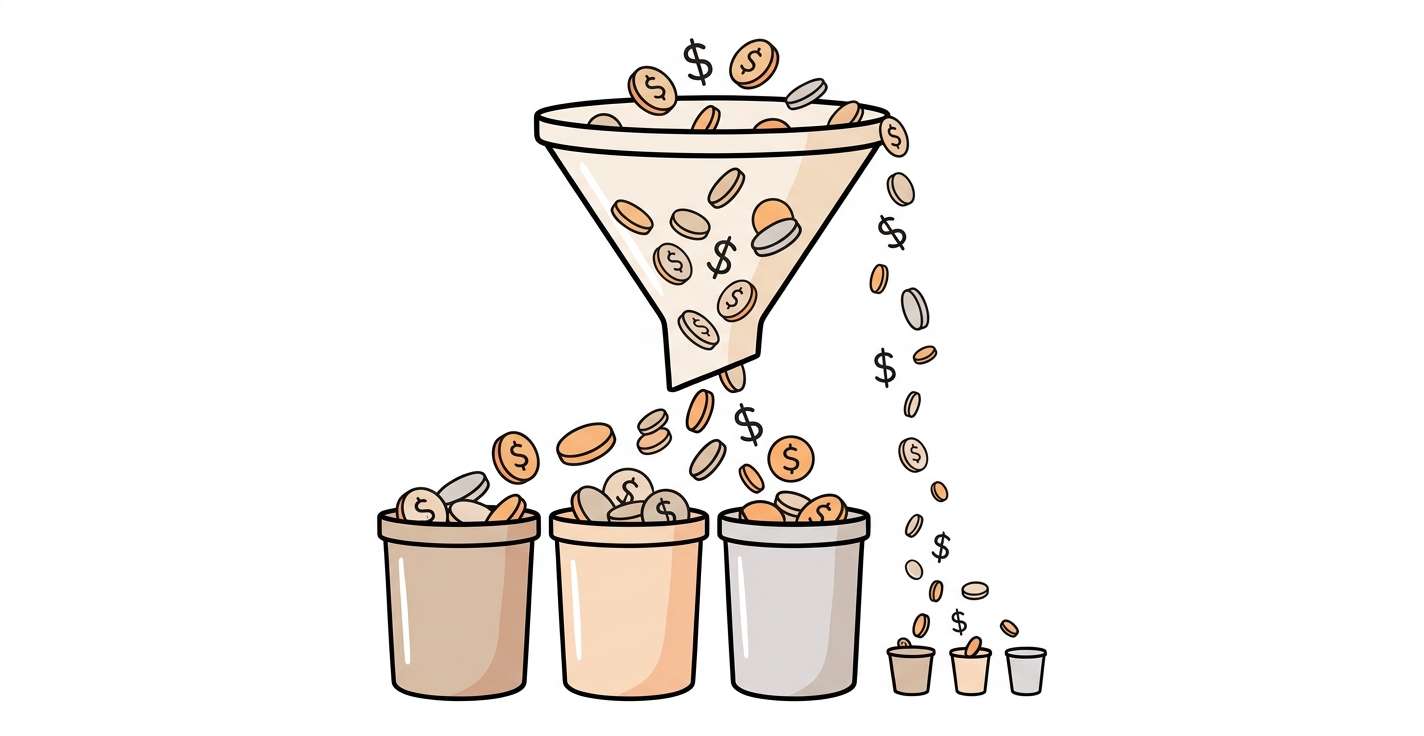
In one quarter, investors put $300 billion into startups globally. That's not a typo. $242 billion of it went to AI companies. And 65% of that total, about $188 billion, went to just four companies: OpenAI ($122B), Anthropic ($30B), xAI ($20B), and Waymo ($16B).
Q1 2026 alone nearly matched 70% of all venture capital spent in 2025. The whole year.
What This Looks Like From the Outside
If you're running a small or mid-sized business, these numbers can feel disconnected from your reality. You're not raising $30 billion. You're trying to figure out if paying $200/month for an AI tool is worth it.
But the money flowing into these companies shapes the tools you'll be using six months from now. When OpenAI raises $122 billion, they're building infrastructure that trickles down to the $20/month ChatGPT plan you use every day. When Anthropic raises $30 billion, Claude gets faster, smarter, and cheaper for you to build on.
The money pools at the top. The tools it builds reach everyone.
The Part That Should Worry You
83% of this funding went to U.S.-based companies. China got $16 billion. The UK got $7.4 billion. This kind of geographic concentration means the companies setting AI standards, building the default tools, and shaping how businesses operate are almost all American.
That's good if you're an American business owner using these tools. It's less good if you're counting on global competition to keep prices fair and innovation honest. Four companies controlling this much capital can set the pace for everyone else.
Late-Stage Dominance Tells a Story
$246 billion of the total went to late-stage companies. That's a 205% jump year-over-year. Early-stage funding grew too, but only 41%. Seed funding only grew 31%.
Translation: investors are doubling down on proven winners, not spreading bets across experimental startups. If you're an AI agency operator or building AI-powered services, this means the platforms you build on are getting more stable and better-funded. That's real.
But it also means fewer new competitors are getting funded at the early stage. The window for scrappy AI startups to emerge and challenge the big four is shrinking. The consolidation is already happening.
What to Actually Do With This Information
Build on the platforms getting the money. If Anthropic and OpenAI are absorbing most of the capital, their APIs and tools will improve the fastest. Bet your workflows on the companies investors are backing.
Watch for price drops. This much capital means aggressive competition between the top players. We already saw this with Claude and GPT pricing wars in 2025. Expect more. Budget accordingly.
Don't wait for the "right" AI tool. With this much money flooding in, the tools will keep changing every quarter. Pick something that works today, use it hard, and switch when something better shows up. Waiting for the perfect solution is the most expensive option.
Pay attention to Waymo. $16 billion for a self-driving company signals that physical AI (robotics, autonomous vehicles, warehouse automation) is about to accelerate. If your business touches logistics, delivery, or fleet management, this quarter's funding is a preview of what's coming.
The Honest Take
$242 billion is a staggering number. I don't know if it's a bubble, a rational response to a real technological shift, or both. Nobody does. What I do know is that the companies receiving this money are building tools that small businesses can use right now, and the pace of improvement is about to get faster.
The best move is the same one it's been for the past two years: use the tools, stay informed, and don't get paralyzed by the scale of what's happening around you.
— Mark Garza, Laimen AI

