Your Next Focus Group Doesn't Eat Snacks
I used to sit behind one-way glass watching people eat cereal for $15,000 a pop.
Not me personally. But I've worked with clients who ran focus groups like that. Eight strangers eating Cheerios in a conference room while a moderator asked what "crunchy" meant to them. The sessions took weeks to plan. The reports took weeks more. And half the insights were things we already suspected.
BluePill just made that whole process feel ancient.
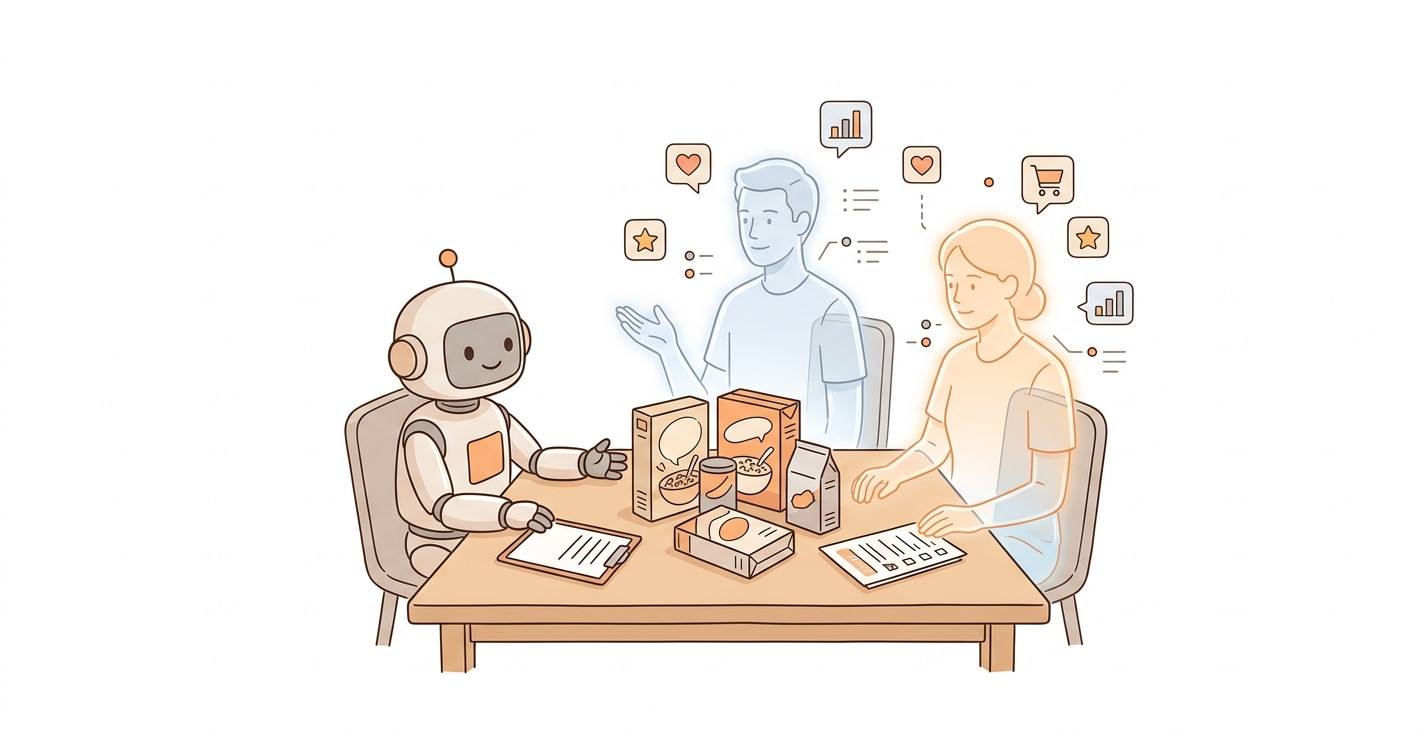
The company launched the AI Consumer Twin Marketplace on August 3. Over 1,000 AI "twins" of real consumers, each built from in-depth interviews with a real person who consented to the process. Those interviews get combined with purchase data, social data, and category-specific information to create a model that responds the way that person would.
You pick the type of consumer you want. Cereal brand loyalists. Price-sensitive granola parents. GLP-1 medication users who changed their breakfast habits. Then you talk to them. Survey them. Test packaging against them. Results come back in minutes, not months.
How It Actually Works
Each twin starts with a real human interview. BluePill sits down with an actual consumer and runs a detailed session about their preferences, habits, and decision-making process. That interview data gets combined with public information and category data to build an AI model of that specific person.
The marketplace currently covers six U.S. breakfast categories: cereal, granola, oats, dairy products, breakfast bars, and yogurt. It offers four research formats. Conversational interviews. Qualitative and quantitative surveys. Concept testing. Packaging evaluation.
Your first study is free. After that, you're paying a fraction of what traditional research costs.
What Changes for Small Businesses
Market research has always been a rich company's game. A decent focus group runs $8,000 to $12,000 per session. Quantitative surveys through panel vendors start around $5,000 and climb fast. Most small businesses skip consumer research entirely because the math doesn't work for a company doing $2 million in revenue.
BluePill's model changes that equation. If an AI twin can reliably predict how a real consumer segment would respond to your product concept, you just handed every small CPG brand the same research capability that Procter & Gamble has.
That's a big "if." Let's look at it.
The Obvious Question
Can an AI twin actually represent a real person? Honest answer: we don't know yet. Not with the same confidence we'd have from traditional research.
The twins are built on real interview data, which gives them a stronger foundation than a generic language model guessing at consumer preferences. But people are inconsistent. They change their minds. They say one thing in a survey and do another at the shelf. An AI twin that perfectly represents what someone said last month might miss the impulse buy they'd make today.
BluePill is betting that consistency is actually a feature. Remove the mood swings, the distracted answers, the social pressure of a group setting, and you might get a clearer signal of underlying preference.
I think they might be right for concept-stage research. Testing whether a packaging design clicks with granola buyers, or whether your new protein bar name confuses people over 40. Those are pattern-matching questions where synthetic respondents could outperform a small sample of real humans.
Where I'd be more cautious: anything emotional, cultural, or trend-driven. The AI twin of a consumer from six months ago doesn't know that overnight oats just went viral on TikTok again.
What You Should Do With This
If you're a CPG brand, a food startup, or anyone selling physical products to consumers, go try it. The first study is free and the worst case is you waste an afternoon.
If you run a service business, watch this space. BluePill started with breakfast categories, but the model works for any industry where you can interview real customers and build preference profiles. Healthcare, financial services, travel. The concept ports.
If you're in market research, start thinking about how synthetic respondents fit alongside your existing methods. The firms that figure out how to blend AI twins with traditional qualitative work will own the next five years.
The focus group isn't dead. But it just got a very fast, very cheap competitor that doesn't need catered lunch.
— Mark Garza, Laimen AI

