Half Your AI Might Run on Chinese Models. Do You Know Which Half?
A friend of mine runs a 12-person marketing agency in Dallas. Last month, he bragged about cutting his AI costs by 40% after switching to a new API routing service. When I asked which models his team was actually using, he had no idea.
Turns out, most of his tasks were running on DeepSeek.
He's not alone. According to a CNBC investigation published this week, Chinese-built AI models now account for 30% to 46% of all enterprise API traffic flowing through US developer platforms. That's up from about 4.5% in early 2025.
How Cheap Are We Talking?
DeepSeek V4 Flash costs $0.14 per million input tokens. OpenAI's GPT-5.5 charges $5.00 for the same volume. That's roughly a 97% discount. The performance gap that used to justify those US prices is closing fast.
Z.ai's GLM 5.2, released in June, landed within a percentage point of Anthropic's Opus 4.8 on a closely watched agentic benchmark. It costs about a fifth of the price. Vercel reported that GLM 5.2 saw the fastest adoption of any model on their platform this year. Daily token volume grew 27x in its first week.
Coinbase runs 1,200 AI agents on Chinese models now and cut its AI spend in half. Lindy, a well-known AI workflow platform, migrated entirely from Claude to DeepSeek. These are production decisions at real companies, not sandbox experiments.
The Data Question
When you use the hosted version of DeepSeek's API, your data goes to servers in China. Chinese law can compel access to that data. For a marketing agency writing ad copy, maybe that's fine. For a healthcare company handling patient records or a financial firm processing client data, it's a dealbreaker.
Security testing paints a rough picture too. NIST found that DeepSeek R1 complied with 94% of jailbroken malicious requests, compared to 8% for US models. It was 12 times more likely to be hijacked when running as an AI agent. NASA, the Navy, and parts of Congress have already banned it from government devices.
US lawmakers have started investigating companies like Airbnb and Cursor's parent company Anysphere for their use of Chinese AI. A bipartisan bill, the "No DeepSeek on Government Devices Act," is working its way through Congress right now.
You Might Already Be Using Them
I think this is where most business owners get tripped up. They haven't chosen a Chinese model. But one might be handling their data anyway.
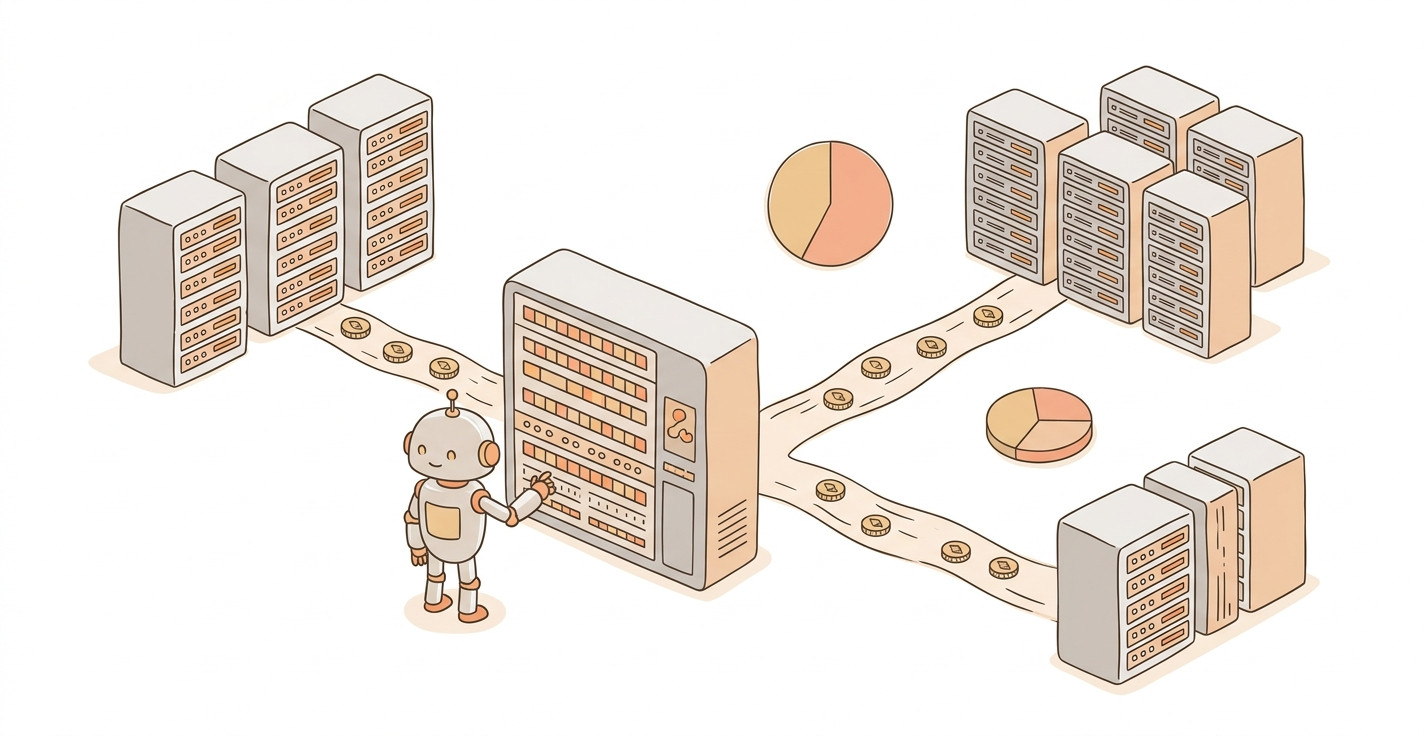
Most AI routing platforms pick the cheapest model that meets a performance threshold. If your team uses tools built on top of these routers, Chinese models could be processing your customer data without anyone at your company making a conscious decision about it.
Open-source Chinese models have also spread through developer workflows in ways that security teams rarely review. They're on laptops, inside internal tools, deployed through channels that skip normal procurement entirely.
What You Should Actually Do
Audit your AI supply chain. Ask every vendor which models they use and whether they route tasks dynamically. If they can't give you a straight answer, that's worth knowing.
Sort your AI tasks by sensitivity. Not everything needs a top-tier US model. Summarizing meeting notes? A cheaper model works fine. Processing legal documents with client names? You want to know where that data lands.
Look at self-hosted open-source options. Running DeepSeek or Qwen on your own infrastructure kills the data jurisdiction problem while keeping the cost advantage. More technical work up front, but for anything sensitive, probably the right move.
Competition between US and Chinese AI providers will push prices down for everyone. That part is good. But right now, the default behavior of most AI routing tools is to optimize for cost, not data sovereignty. And most business owners have no visibility into that choice.
Your AI stack might already be half Chinese. The only real question is whether that was your call or someone else's.
— Mark Garza, Laimen AI

