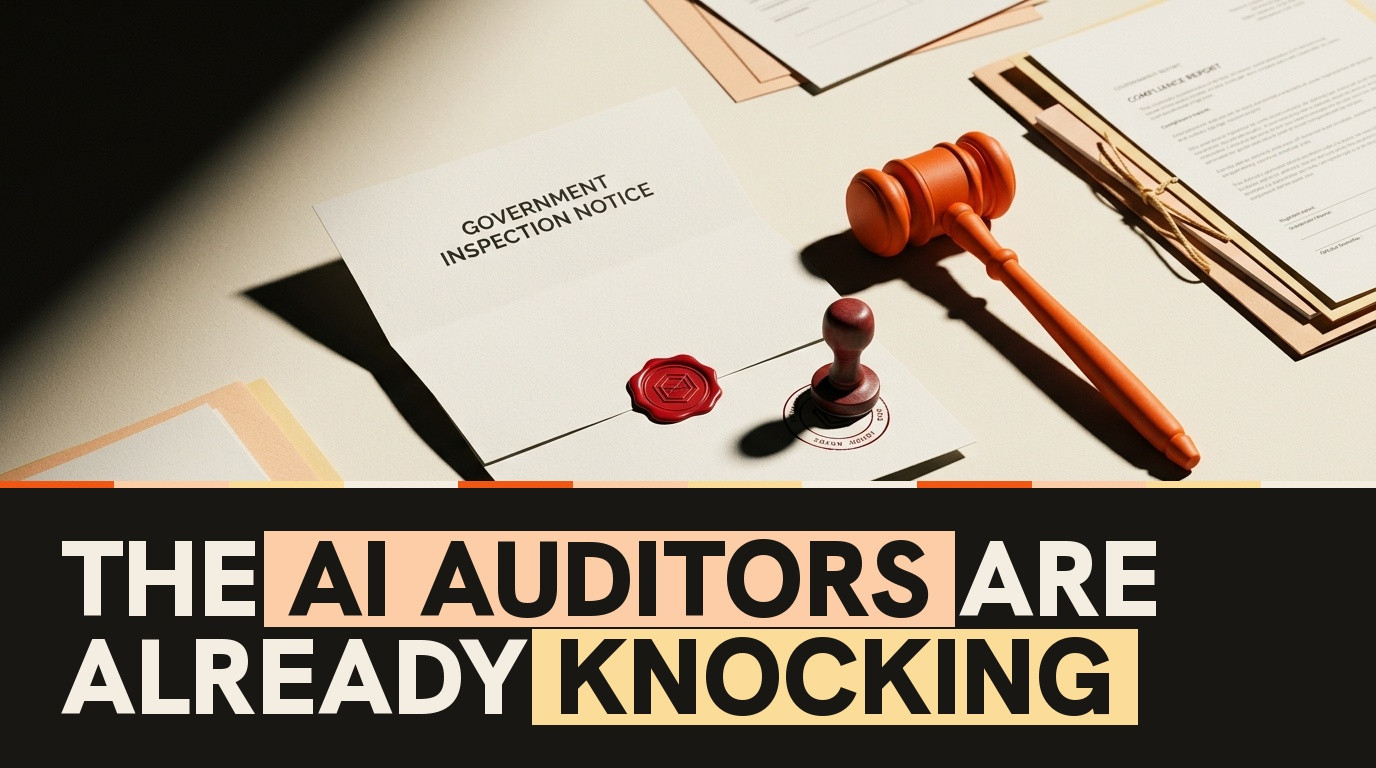
The EU Just Started Knocking on Doors. Your AI Might Be Next.
A friend of mine runs a recruiting firm in Berlin. Last week, he got a letter from Germany's federal data protection authority. They want documentation on every AI tool his team uses to screen resumes.
He called me in a mild panic. "I thought we had until next year."
He didn't. Nobody does anymore.
The EU AI Act Is No Longer a Theory
The law's toughest provisions took effect on August 2, 2026. By September, regulators in France, Germany, and Spain launched their first wave of formal inspections. They skipped the warning stage and went straight to auditors.
Three sectors are getting hit first: automated hiring (resume screening, candidate ranking), algorithmic credit scoring in retail banking, and AI triage tools in private healthcare clinics.
If your business uses AI in any of those areas and touches European customers or employees, you're in scope.
The Numbers That Matter
Violations carry fines up to 6% of global revenue or €30 million, whichever is higher. For comparison, GDPR caps at 4%. The EU raised the stakes.
Foundation model providers with systems exceeding 10²⁵ FLOPs have until September 15 to submit formal risk evaluations to the European AI Office. That deadline is days away as I write this.
Twenty-four national regulators are now coordinating inspections. France's CNIL, Germany's BfDI, and Spain's AESIA are leading the first round.
Why American Business Owners Should Care
"We don't operate in Europe" is a comforting thought. It's also probably wrong.
If you have a single European customer, employee, or contractor, you might be in scope. If your SaaS vendor processes EU data through AI features, their compliance gap becomes your liability.
This pattern should look familiar. GDPR started as a European regulation. Within two years, it became the baseline privacy standard for every serious business globally. California's CCPA borrowed heavily from it. The same thing is playing out with AI regulation right now.
What Compliance Actually Looks Like
The inspectors want three things:
Documentation. A written record of every AI system you use, what it does, and what data it processes. Not a napkin sketch. A formal risk assessment.
Human oversight. Proof that a real person reviews AI-driven decisions that affect people's lives, jobs, or credit. Fully automated rejection pipelines are the first thing auditors flag.
Transparency. People affected by your AI need to know they're being evaluated by a machine. That means clear disclosure at the point of interaction.
Most businesses I talk to have none of this in place.
The Practical Move
No reason to panic. But you should get moving.
Audit your AI tools this week. Make a list of every system that touches customer data or makes decisions about people. Your ATS, your chatbot, your lead scoring, your customer support AI. All of it.
Ask your vendors about their EU AI Act compliance status. If they look confused, that tells you everything.
Build a simple documentation trail. Who approved the tool? What does it do? What data does it use? Who reviews its outputs? You can do this in a spreadsheet. Just start.
The businesses that build compliance systems now get a six-month head start. When US states pass their own AI laws (and they will), you'll already be ready.
Twelve Hours Versus Seven Figures
My friend in Berlin spent his weekend building documentation for tools he's used for two years. He told me it took about 12 hours. Annoying, but manageable.
Compare that to a potential seven-figure fine. The math is obvious.
The EU AI Act is live. Inspectors are working. The window for "we'll get to it later" just closed.
— Mark Garza, Laimen AI

