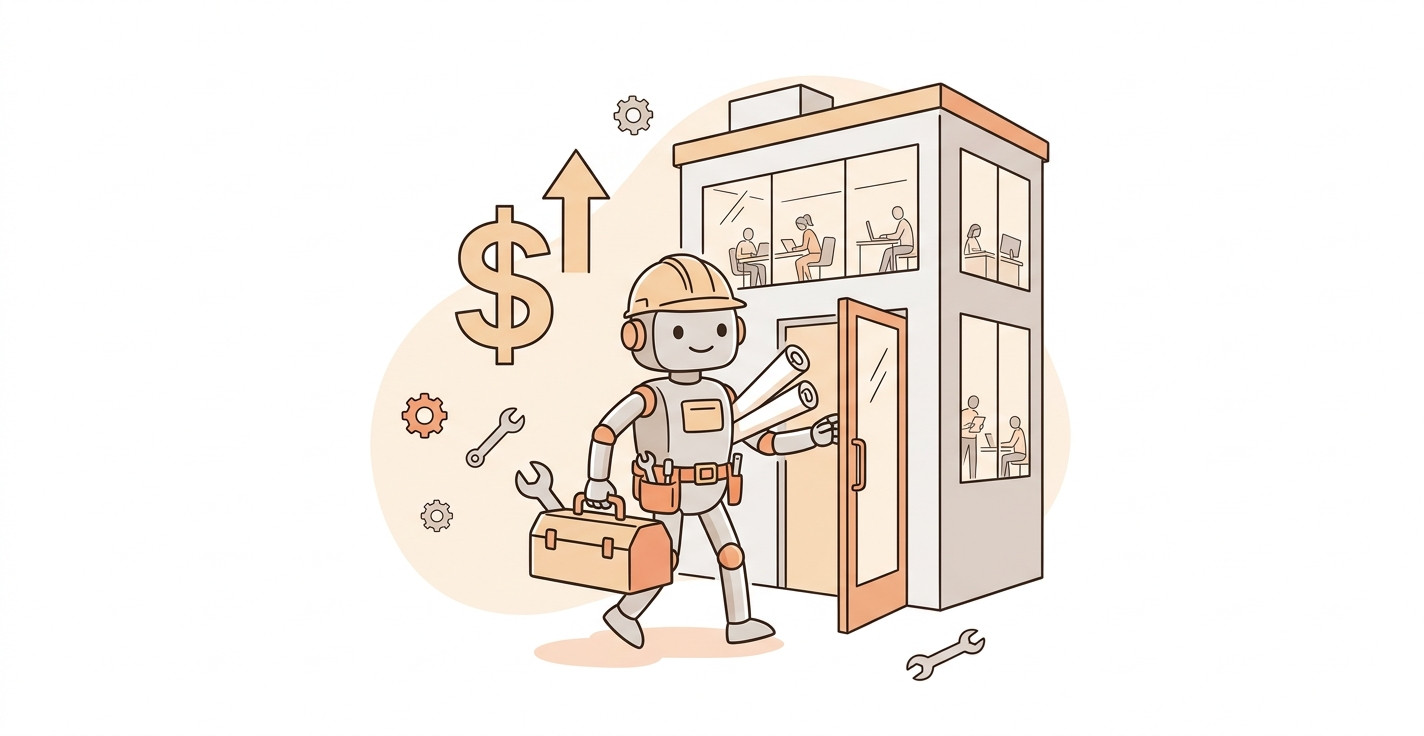
Microsoft Hired 6,000 Engineers to Help Companies Use the AI They Already Bought
The Billion-Dollar Admission
Last week, Microsoft did something that should make every business owner pay attention. They created an entirely new company, staffed it with 6,000 engineers, backed it with $2.5 billion, and gave it one job: help enterprises actually use the AI tools they already bought.
Two days before that, Amazon committed $1 billion to a nearly identical program. Anthropic and OpenAI both launched their own deployment ventures in May. Four of the biggest names in AI, all racing to solve the same problem in the same quarter.
That problem is painfully simple. Most companies that bought AI can't make it work.
What Microsoft Frontier Company Actually Does
The new unit is called Microsoft Frontier Company. Rodrigo Kede Lima, a 30-year industry veteran, runs it. The pitch is simple. Microsoft sends engineers to sit inside your business, learn your workflows, and build AI systems that produce measurable results.
Not a consulting engagement where someone hands you a slide deck and leaves. Not a software license you figure out on your own. Actual engineers, embedded in your operation, tuning AI to fit your specific processes.
London Stock Exchange Group is already using it. So are Unilever, Land O'Lakes, and Novo Nordisk. These aren't small companies experimenting with chatbots. These are massive organizations that spent millions on AI and still needed help making it stick.
Why This Matters More Than Another Model Release
The AI industry has spent three years telling you the tools are good enough. Better models, faster inference, lower prices. And the tools are good. That was never really the bottleneck.
Implementation is the bottleneck. Getting AI to work inside a real business, with real data, real compliance requirements, and real employees who need to trust the output. That's where most AI projects die.
When Microsoft, Amazon, OpenAI, and Anthropic all launch deployment companies in the same quarter, they're telling you something the marketing never did. The technology was the easy part. Making it work inside your business is a completely different challenge.
What This Means If You Run a Smaller Business
This part is a little uncomfortable to think about. If Unilever needs 6,000 Microsoft engineers to deploy AI properly, a 50-person company doesn't have a prayer of doing it alone. And nobody's sending embedded engineers to your office for free.
But the lesson isn't "give up." The lesson is stop trying to boil the ocean.
The companies failing at AI transformation are the ones trying to do everything at once. New CRM integrations, automated reporting, AI-powered customer service, predictive analytics, all in the same quarter. That's a recipe for spending a lot and shipping nothing.
The companies winning are picking one workflow that costs them real money or real time, building AI around that single process, proving it works, and then expanding. It's less exciting than a "full digital transformation." It also actually works.
The IP Question You Should Be Asking
One detail from Microsoft's announcement deserves attention. Judson Althoff, Microsoft's commercial CEO, said explicitly: "Their data, their IP, their competitive advantage. None of it is used to train models in ways that commoditize."
That's a direct response to a fear that's kept many businesses from going deeper with AI. When you feed your proprietary data into an AI system, who owns what comes out? Does your competitive intelligence become training data for your competitors?
Microsoft is betting that the trust question matters more than the intelligence question. And I think they're right. If you're evaluating AI vendors right now, start with "what happens to my data after I give it to you." That single question will tell you more than any benchmark or demo ever could.
One Problem, One Solution
The biggest companies in AI just admitted what small business owners have felt for two years. The tools are powerful. Getting them to work inside a real business is a different problem entirely.
You don't need $2.5 billion. You need one specific problem, one AI solution built around it, and someone who understands your business well enough to connect the two. That's the gap Microsoft is trying to fill at the enterprise level. At the small business level, it's the gap where good AI consultants and agencies earn their keep.
Implementation is where the real money moves. The companies that figure it out first will be the ones still standing when the hype fades.
— Mark Garza, Laimen AI

