OpenAI Just Merged Everything Into One App. Your Workflow Stack Looks Different Now.
OpenAI used to sell you a chatbot. Now they want to replace your entire desktop.
On July 9, the company killed the standalone Codex app, retired their Atlas browser, and folded everything into one desktop application. Then they launched ChatGPT Work on top of it. Fifteen business integrations. Autonomous multi-hour task completion. Usage-based pricing.
If you've been juggling three AI subscriptions and wondering when consolidation would start, it just did.
One App, Three Modes
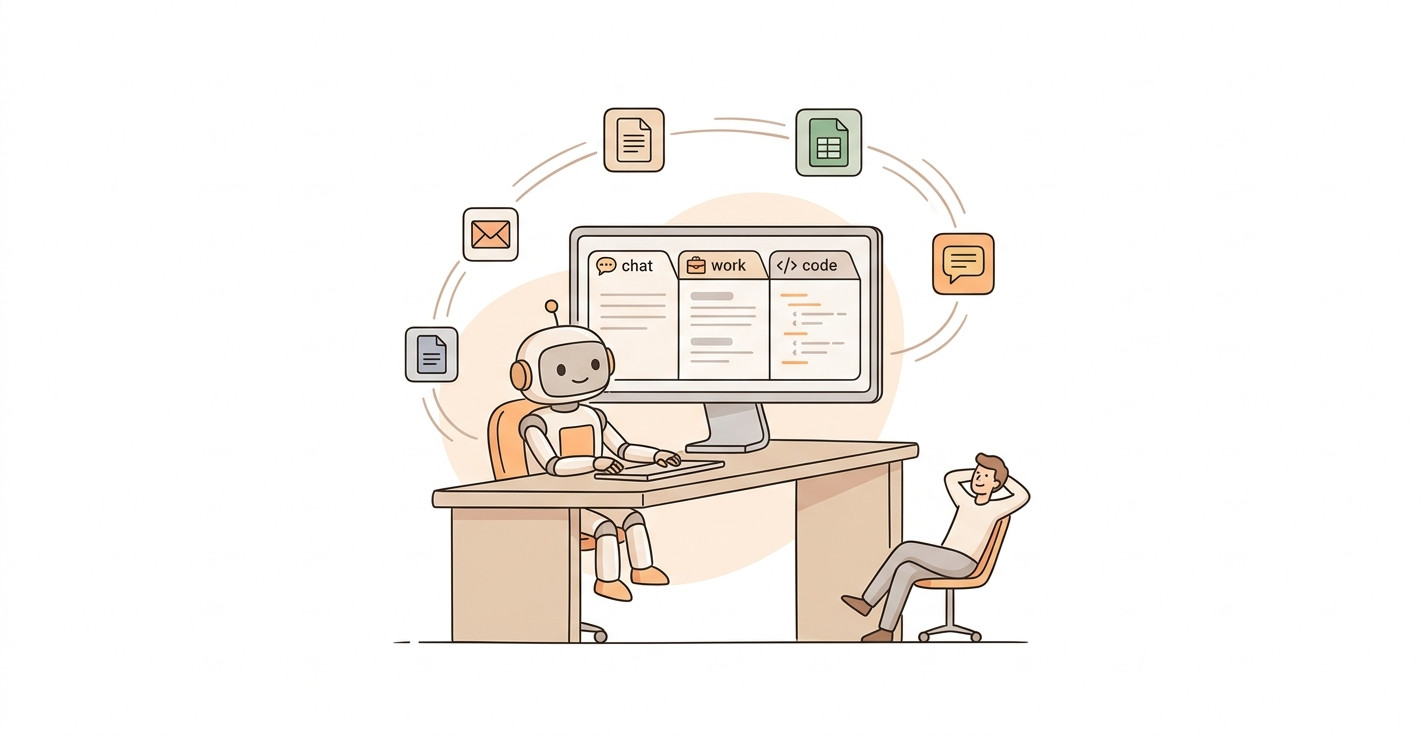
The updated ChatGPT desktop app now has three modes: Chat, Work, and Codex. Chat works the way you'd expect. Codex handles coding. Work is the new piece, and it's the one that matters most for business owners.
ChatGPT Work is an autonomous agent. You give it a goal, it breaks that goal into steps, pulls context from your connected apps, and works through the project on its own. For hours, if it needs to. It delivers finished outputs: spreadsheets, documents, slides, campaign briefs.
At launch, it plugs into Google Drive, SharePoint, Slack, Microsoft Teams, Gmail, Outlook, Salesforce, Adobe, Zoom, LinkedIn, GitHub, Canva, and Dropbox. You either @mention the tool you want or let the agent figure out which data sources matter.
CEO Fidji Simo put it plainly. ChatGPT is moving "from a chat interface to a full computing environment." They're not competing with other chatbots anymore. They're going after your IDE, your browser, and your office suite.
What This Changes for Small Businesses
If you're running a five-person team, somebody on your staff spends chunks of their week on tasks that follow a pattern. Research a topic. Pull data from a spreadsheet. Draft something. Format it. Send it to the team for review.
ChatGPT Work handles that entire chain from a single prompt. The demo OpenAI showed: turning customer research into a campaign brief, generating creative assets, then adapting everything for different markets. All in one session, keeping context the whole way through.
That kind of work eats 3 to 4 hours a week in most small businesses. Now there's a tool that takes the assignment and comes back with a finished product.
How the Pricing Works
OpenAI moved to usage-based billing for Work. You pay based on task complexity, not a flat monthly fee. Enterprise and education accounts get spend controls so administrators can cap costs per team or per person.
The desktop app itself is available on every plan, including Free. Pro, Enterprise, and Edu users got first access to Work, with Plus and Business tiers coming next.
For AI agencies, this creates a real problem. If your client can hand ChatGPT Work a prompt and get back a finished deliverable, your "AI automation" service needs to go deeper than basic workflow chains. The floor just rose.
Security and Trust
OpenAI built an Auto-Review feature that checks critical actions before the agent runs them. They say it blocked 100% of protected data extraction attempts during testing. Independent verification hasn't happened yet, so take that number with a grain of salt if you're in a regulated industry.
My advice: test it with non-critical workflows first. See how the permissions model works in practice before pointing it at your CRM or financial data.
What to Do About It
This mirrors what Anthropic did with Claude Cowork. Both companies are betting that AI tools won't stay in a chat window. The future is an agent that lives inside your workflow and acts on your behalf.
The practical question is simpler than all the "super app" hype suggests. Can you describe a repetitive task clearly enough for an agent to handle it? If yes, tools like ChatGPT Work are getting close to real. If not, start documenting your processes now. You'll need those descriptions sooner than you think.
The businesses that benefit most won't be the ones with the fanciest AI strategy. They'll be the ones who took the time to write down how their work actually gets done.

