OpenAI Stopped Building Chatbots Long Enough to Design Your Next Computer Chip
Last week, OpenAI did something that got buried under the usual AI hype cycle. They partnered with Synopsys, the company whose software designs most of the world's computer chips, to build a model called GPT-Synopsys.
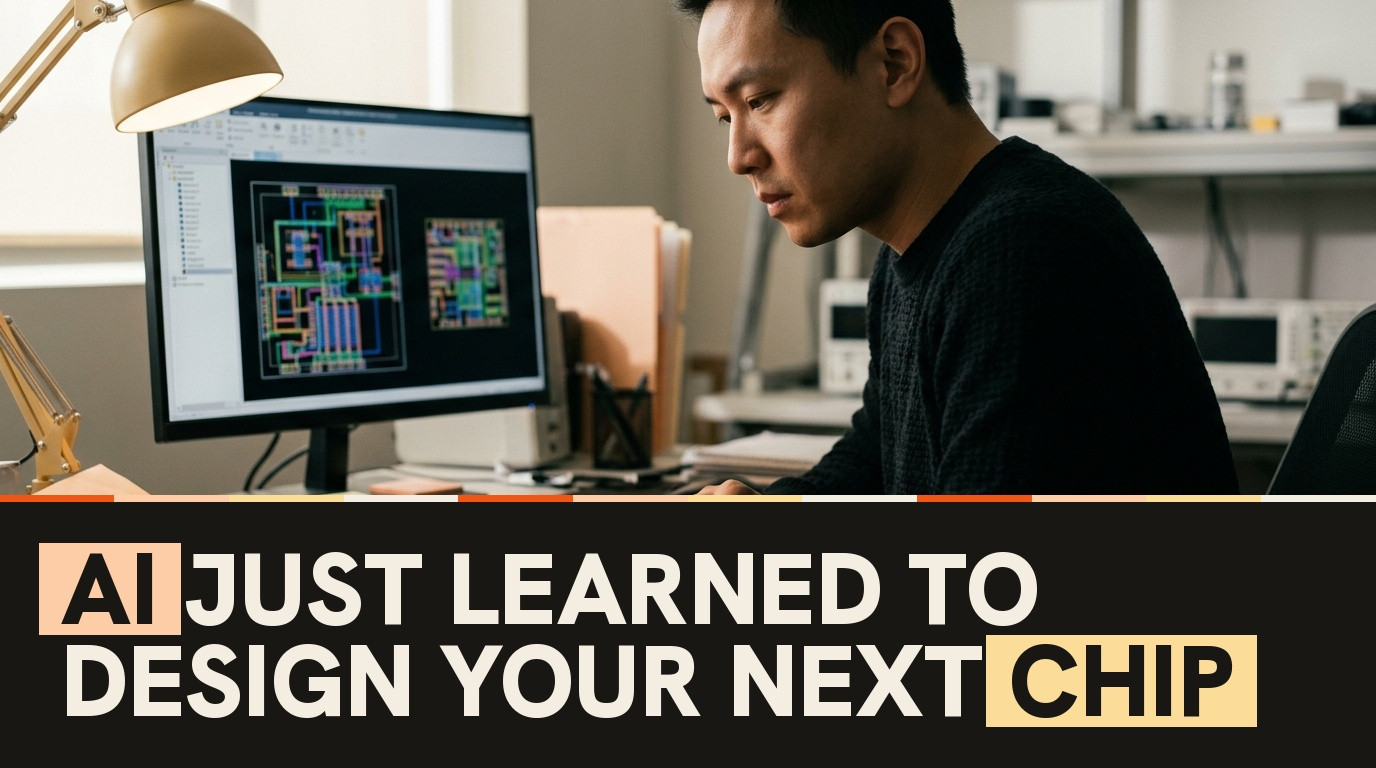
Not a chatbot. Not a writing assistant. An AI that learns how to operate chip design software and lay out billions of transistors on a piece of silicon.
If that sounds like somebody else's problem, keep reading. The pattern here matters more than the specific product.
Chip Design Is a Perfect Test Case
Designing a chip takes months. Engineers write circuit descriptions in a code-like language, then spend weeks figuring out how those circuits get arranged on silicon. Every trade-off between power, speed, heat, and size has to be tested against real physics before anything gets manufactured.
OpenAI's model will learn to use Synopsys' design tools to work through those trade-offs. Greg Brockman, OpenAI's co-founder, said the goal is to "shave off weeks, months from the design process."
Synopsys CEO Sassine Ghazi structured the deal so the AI doesn't replace their existing tools. It sits on top of them. The model proposes designs, and Synopsys' traditional software checks the physics. If the model gets something wrong, the verification tools catch it.
That's a smart setup. And it's the exact pattern worth paying attention to.
This Matters Way Beyond Semiconductors
The bigger signal for your business: OpenAI isn't just building better chatbots anymore. They're embedding AI directly into industry-specific software platforms.
Synopsys is a $60+ billion company. Their software is the standard for chip design. OpenAI didn't build a competing tool. They trained a model to operate the existing one better.
Think about what that means for the tools you already use. Your CRM, your accounting software, your project management platform. The next version of AI in your business probably won't be a standalone chatbot you paste text into. It'll be baked into the software you already pay for, trained on exactly how that software works.
The revenue model is telling, too. OpenAI pays Synopsys a subscription fee to train on their tools. When customers use GPT-Synopsys, both companies share revenue based on how much the AI actually improves the customer's chip design. They get paid based on outcomes, not seat counts or token volume.
What This Means If You Run a Small Business
You probably aren't designing semiconductors. But you're probably making dozens of decisions a day that follow the same pattern: take inputs, weigh trade-offs, pick the option that satisfies the most constraints.
That's what GPT-Synopsys does for chip engineers. AI tools will increasingly do the same for scheduling, pricing, inventory, hiring, and marketing decisions.
The Synopsys deal also revealed something about the company's confidence. Ghazi told investors Synopsys expects 15% revenue growth for fiscal 2027. Wall Street had penciled in 11%. The stock jumped 7% on the news.
When your software vendor starts beating revenue forecasts because they added AI, that's a signal. It means the AI isn't a demo. It's generating measurable value that customers are willing to pay for.
Three Things to Do With This
Watch your own vendors. Pay attention to AI announcements from the software companies you already use. Not from OpenAI or Google directly. From your CRM, your ERP, your industry-specific tools. That's where specialized AI will show up in your workflow first.
Copy the verification pattern. Synopsys didn't hand the keys to the AI and walk away. The model proposes, the traditional tools verify. If you're deploying AI in your business, build the same check. Let the AI draft, suggest, and improve. Keep a human or a rule-based system confirming the output.
Watch the pricing shift. Revenue sharing based on results is a different deal than paying per seat. If your vendors start offering AI features with performance-based pricing, that's usually a sign they trust the tool to deliver. It also means you can try it with less risk.
OpenAI and Synopsys just showed where AI's real value is heading: into the specialized software that already runs your industry, doing the specific work that specific experts do.
— Mark Garza, Laimen AI

