OpenAI Just Killed Custom GPTs. What Replaced Them Is Way More Useful.
Last year, I built a Custom GPT to help with client onboarding. It had instructions, a knowledge base, and a nice little avatar. It also couldn't send an email, update a spreadsheet, or do anything outside of ChatGPT. Basically a well-trained parrot locked inside a box.
On April 22, OpenAI killed Custom GPTs for business users. And honestly, it's about time.
What replaced them: Workspace Agents
OpenAI launched what they're calling Workspace Agents. Available now for ChatGPT Business ($20/user/month), Enterprise, and Edu plans.
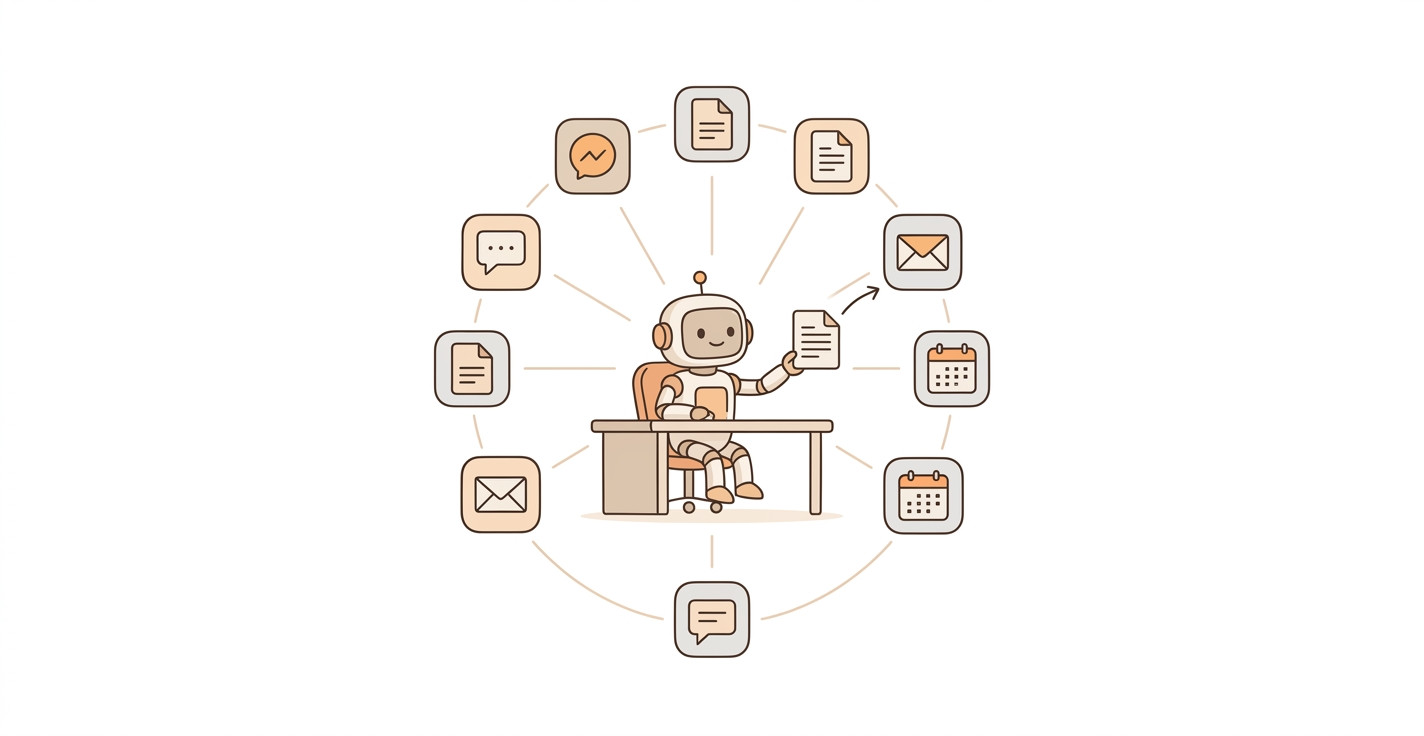
The pitch is simple. Instead of chatting with an AI that gives you answers you then have to go execute, these agents connect directly to the tools your team already uses. Slack. Google Drive. Salesforce. Microsoft apps. Notion. Atlassian.
They run in the cloud. They keep working when you close your laptop. They can prepare reports, write code, respond to messages, and move across applications to finish a job.
If Custom GPTs were a smart assistant trapped behind a glass wall, Workspace Agents hand that assistant a set of keys.
Why this matters more than another model release
Every week brings a new model benchmark. GPT-5.5 dropped the same week. DeepSeek V4 launched. Claude Opus 4.7 shipped two weeks ago.
But models are the engine. Workspace Agents are the steering wheel and pedals. A faster engine doesn't help if you still have to manually copy and paste outputs between apps.
The real shift here is that OpenAI is positioning ChatGPT as a platform for doing work, not just answering questions. Your team can build an agent once, share it across the company, improve it over time, and use it directly inside Slack.
What this actually looks like in practice
Say you run a 15-person marketing agency. Right now, every Monday someone logs into three platforms, pulls last week's numbers, drops them into a Google Sheet, and writes a summary for the team Slack channel.
A workspace agent handles that. You build it once. It runs every Monday morning. It pulls data from the connected tools, formats it, posts it to Slack. Nobody touched it.
Or take sales meeting prep. Before every call, a workspace agent pulls the prospect's recent emails from Gmail, checks their company page, grabs notes from previous conversations in Salesforce, and drops a briefing document into your Drive folder. Done before your second cup of coffee.
These aren't hypothetical examples. OpenAI published both of these as template workflows in their documentation.
The catch (there's always one)
Workspace Agents are free until May 6. After that, they move to credit-based pricing. OpenAI hasn't released the exact pricing structure yet, so there's a real chance the costs add up quickly for heavy users.
Also, Custom GPTs are getting deprecated for business accounts. If you've built GPTs for your team, you'll need to migrate them. OpenAI hasn't set the exact deadline, but the direction is clear: Custom GPTs are done.
And the usual AI caveats apply. Agents working on their own across your business tools means you need clear guardrails. An agent that responds to the wrong Slack thread or sends a half-baked report to a client can do damage that takes longer to fix than doing the task manually.
What to do right now
If you're on a ChatGPT Business or Enterprise plan, try building one workspace agent this week. Pick the most boring, repetitive task your team does. Status updates, data pulls, meeting prep. Build an agent for it while it's still free.
If you're still on the Plus plan ($20/month for individuals), workspace agents aren't available to you yet. But this tells you where ChatGPT is headed: away from personal assistant, toward team operating system.
The AI tools race used to be about who had the smartest model. Now it's about who plugs into your actual workflow. OpenAI just made a big move in that direction.
— Mark Garza, Laimen AI

