Samsung Just Told Every Factory on Earth: Go Full AI by 2030 or Get Left Behind
A friend of mine runs a mid-size electronics manufacturer in Dallas. Last week, he told me his "smart factory" initiative was a bunch of sensors collecting data that nobody looked at. He's not alone.
Samsung just announced it will convert every single factory it operates to full AI automation by 2030. Not a pilot. Not a proof of concept. Every factory.
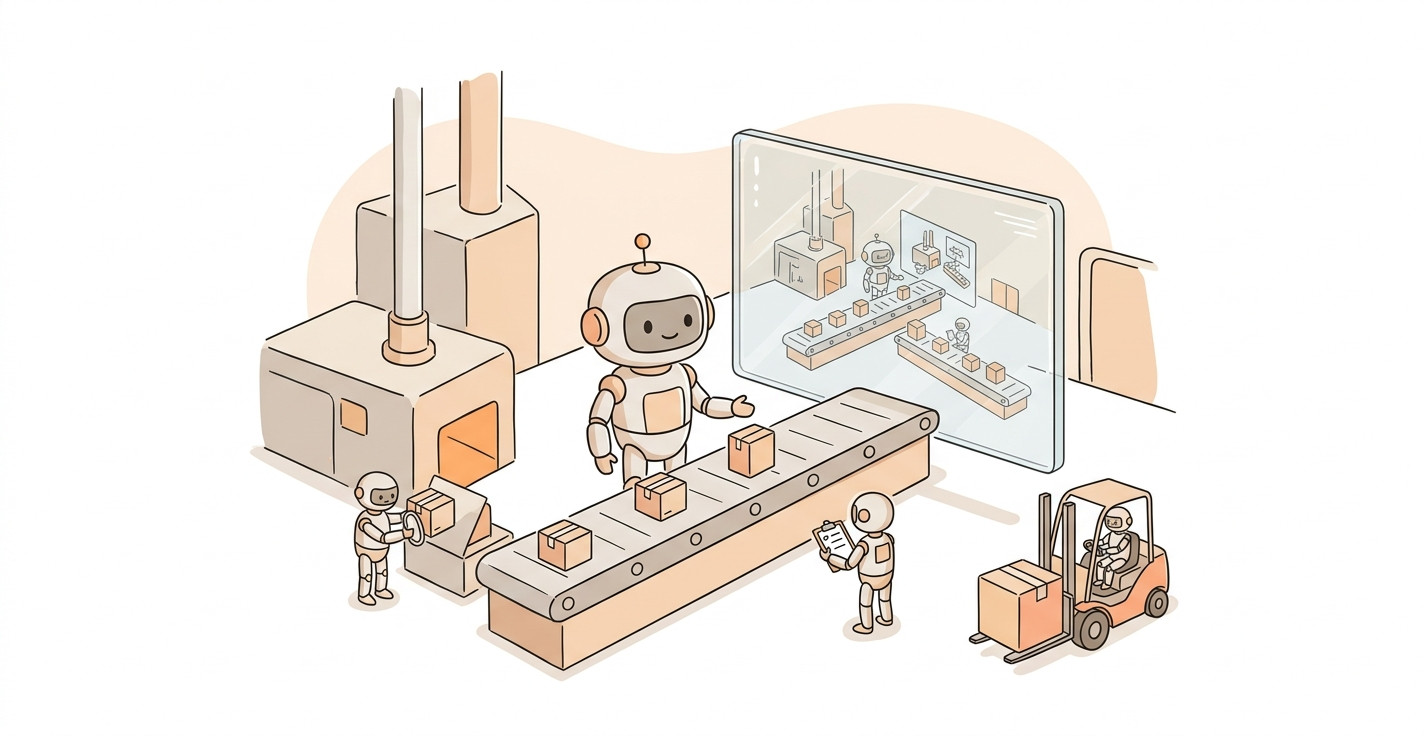
They're deploying digital twins (virtual copies of their physical production lines) alongside specialized AI agents built for quality control, production management, and logistics. Each agent handles one job and does it well.
Why This Matters Beyond Samsung
Most smart factories today run at just 30-40% line automation. That number comes from IIoT World, and it should make any manufacturing leader uncomfortable. Samsung is targeting 100%.
The gap between those numbers is massive. Filling it requires more than buying new software. It means redesigning production workflows from the ground up.
"Pilot Purgatory" Is Dead
The manufacturing world has a name for what most companies have been doing with AI: pilot purgatory. You run a small test, collect impressive results, present them in a meeting, and then nothing changes at scale.
Samsung's announcement is a direct rejection of that approach. They set a hard deadline. They picked specific technologies. They committed publicly.
For Samsung's suppliers (and they have thousands), this creates pressure. If Samsung's factories are fully AI-driven, they'll expect their supply chain partners to keep up. That pressure rolls downhill fast.
What Samsung Got Right About AI Architecture
Most companies trying to build "AI factories" start with one big system that's supposed to handle everything. Samsung went the opposite direction.
They're using specialized AI agents, each trained on one domain. One agent watches quality. Another manages production scheduling. Another handles logistics. They don't need to understand each other's jobs. They just need to be excellent at their own.
This approach lowers the risk of one bad decision spreading across the entire operation. If the quality agent needs retraining, you don't shut down logistics to do it.
Digital twins add another layer. Before Samsung pushes any change to a live production line, they test it in a virtual copy first. Fewer expensive mistakes on the physical floor.
What This Means If You Don't Run a Factory
You might be thinking this doesn't apply to you. If you don't manufacture anything, why care?
Two reasons.
First, if you buy physical products from anyone, your supply chain is about to change. Manufacturers who adopt AI at Samsung's pace will produce faster, cheaper, and with fewer defects. Those who don't will struggle to compete on price and quality. Your procurement decisions will shift.
Second, the playbook Samsung is using works beyond factories. Specialized AI agents handling specific business functions. Digital models of your operations running before you change the real thing. That architecture translates to logistics companies, service businesses, even property management.
A property management company could run the same setup: one AI agent handling maintenance scheduling, another managing tenant communications, another improving energy usage. Same principle, different industry.
What To Do About It
Samsung gave themselves four years. They're one of the most capable manufacturing companies on the planet, and they think four years is the right timeline.
If your business touches physical products, processes, or operations in any form, the real question is whether four years is enough time for you.
Start by auditing where you actually stand. Not where your last consultant's presentation said you stood. Where you actually are today. Most businesses are closer to that 30-40% number than they'd like to admit.
Then pick one process. Not your entire operation. One process where an AI agent could take over a specific, repeatable task. Get that working before you try to tackle everything at once.
Samsung didn't announce they'd "explore AI opportunities." They set a date. That's the difference between companies that transform and companies that talk about it.
— Mark Garza, Laimen AI

