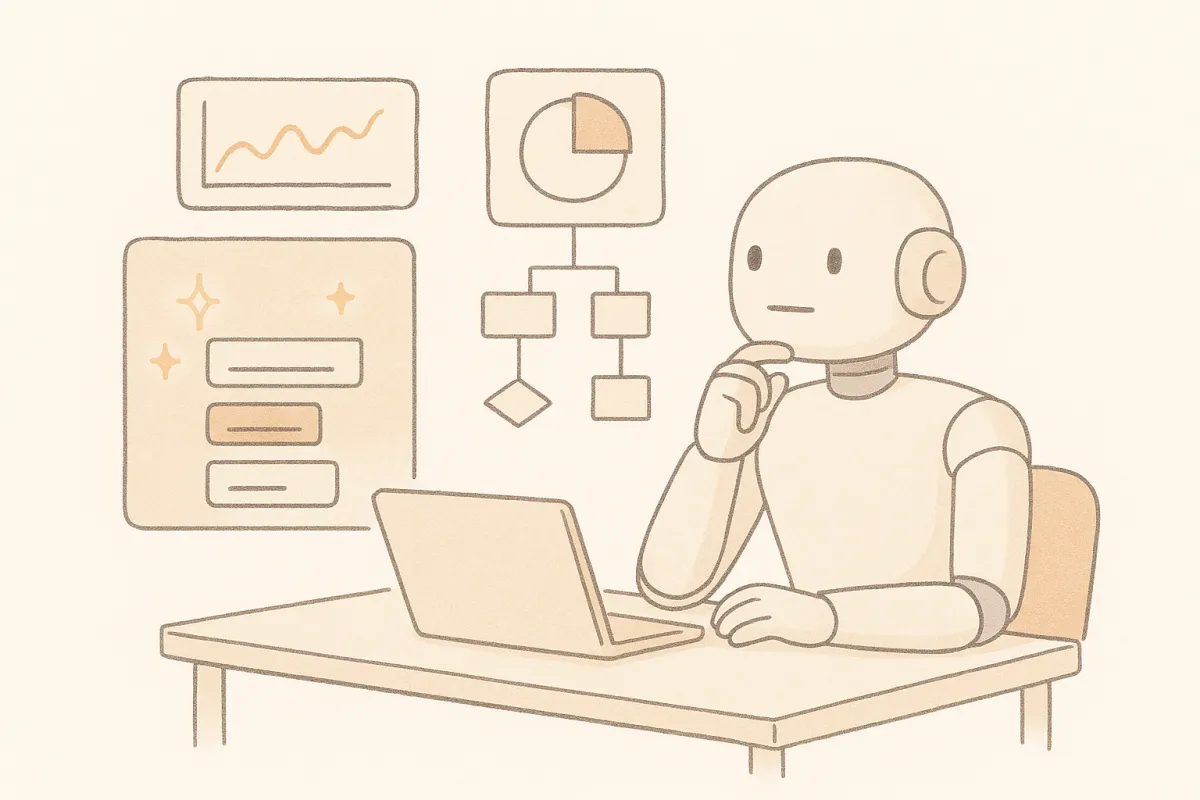
Snowfire AI: The Decision Intelligence Platform Executives Have Been Waiting For
The Problem With How Executives Make Decisions Today
Most senior leaders are drowning in data but starving for insight. They have dashboards, reports, slide decks, and analyst briefings — and yet, the most consequential decisions still get made on gut instinct or whichever narrative was most recently delivered in a board meeting.
That gap — between the data available and the decision quality actually achieved — is exactly what Snowfire AI was built to close.
What Is Snowfire AI?
Snowfire AI describes itself as an Adaptive Enterprise Decision Intelligence Platform for Business Executives. That's a mouthful, but unpack it and you get something genuinely important:
- Adaptive — it learns from your context, your industry, your patterns. It doesn't just run static queries against a database; it adjusts to how your business actually operates.
- Enterprise — built for organizations with real complexity: multiple data sources, multiple stakeholders, regulated environments, and decisions with material consequences.
- Decision Intelligence — not just business intelligence (BI). BI tells you what happened. Decision intelligence tells you what to do about it.
- For Business Executives — designed for the people who have the least time and the most accountability. The interface and the output are tuned to how a CEO, CFO, or COO actually thinks.
Why Decision Intelligence Is Different From Business Intelligence
This distinction matters more than it might initially seem. Traditional BI tools — your Tableaus, your Power BIs, your Lookers — are excellent at answering the question: what happened? They surface historical data in visual formats that analysts and operations teams can work with.
Decision intelligence goes further. It answers: given what happened, what should we do next? It incorporates predictive modeling, scenario simulation, risk weighting, and contextual awareness to move from observation to recommendation.
For a business executive, this is the difference between a rearview mirror and a navigation system.
The Adaptive Layer: Why It Matters
What separates Snowfire from a well-configured BI dashboard is the adaptive engine. No two enterprises operate the same way, and no two executives ask the same questions. A rigid platform that requires months of implementation before it delivers value isn't really serving the decision-maker — it's serving the IT department.
An adaptive platform learns. It recognizes which metrics you return to, which anomalies you flag, which scenarios you stress-test. Over time, it gets better at anticipating the questions you'd ask before you ask them. That's not a feature — that's the whole game.
Who Should Be Paying Attention to Snowfire
If you're a business executive in any of these situations, Snowfire AI deserves a hard look:
- You're making multi-million dollar decisions with data that's already three days old by the time it reaches you
- Your team spends more time building decks for you than acting on insights
- You've invested in BI tools that your analysts love but that you personally never use
- Your competitive environment moves faster than your reporting cycles
- You want to bring AI into your decision-making but don't know where to start
The Bigger Picture: AI That Serves Judgment, Not Replaces It
There's an important distinction worth naming here. The best executive AI tools don't try to replace human judgment — they serve it. They give a well-calibrated leader better inputs, faster synthesis, and clearer visibility into consequences. The decision still belongs to the person in the seat.
Snowfire AI appears to understand this. The platform isn't positioned as an autopilot — it's positioned as a co-pilot. Adaptive intelligence that amplifies what a good executive already does well.
That's the right framing. And frankly, it's the only framing that gets adopted at scale inside organizations where executives are accountable for outcomes.
Worth Watching
Enterprise decision intelligence is one of the fastest-growing categories in AI tooling right now, and for good reason. The ROI on better executive decisions is almost impossible to overstate — one better capital allocation call, one competitor move anticipated earlier, one risk identified before it metastasizes — any one of those can dwarf the cost of the platform.
Snowfire AI is building in exactly the right place. Keep an eye on them.
— Mark Garza, Founder, Laimen AI

