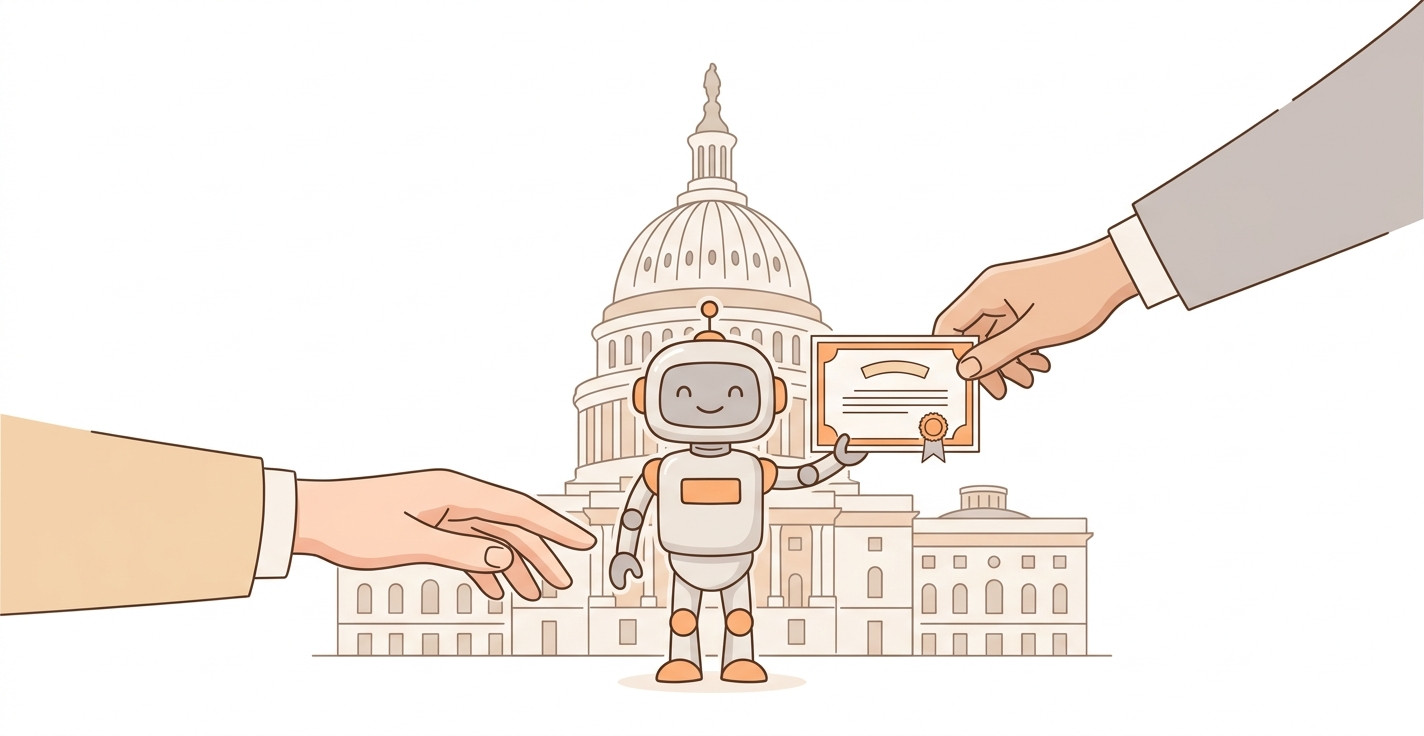
Trump and Sanders Both Want the Government to Own a Slice of AI
Last week, something happened that doesn't happen often in American politics. Donald Trump and Bernie Sanders agreed on something.
Both want the U.S. government to take equity stakes in frontier AI companies like OpenAI, Anthropic, and xAI. Trump told reporters aboard Air Force One that making the government "a partnership in this revolution" would be "a beautiful thing." Sanders introduced the American AI Sovereign Wealth Fund Act, proposing a one-time 50% tax on frontier AI companies, paid in stock rather than cash.
The timing isn't random. Anthropic confidentially filed for its IPO at a $965 billion valuation. OpenAI is targeting a September 2026 IPO somewhere between $730 billion and $850 billion. That kind of money draws political attention from every direction.
So What Does This Mean If You Run a Business?
If the government takes stakes in the companies building your AI tools, governance changes. Board seats, reporting requirements, and policy mandates come with equity ownership. Your AI provider could end up answering to a government oversight board alongside its shareholders.
Sanders framed his bill around copyright. He argued these companies trained their models on creative works "without permission or compensation," and the public deserves ownership as a result. That argument has legs regardless of where you sit politically.
Trump's version sounds friendlier. He's talking about partnership, not taxation. But the precedent already exists. His administration has taken equity positions in Intel, rare earth companies, and quantum firms. This isn't theoretical.
Behind the scenes, OpenAI CEO Sam Altman is quietly pitching smaller government ownership stakes to White House officials. The goal is to defuse populist risk before the IPO. Think 2-5% rather than 50%. Just enough for both sides to claim a win.
The Practical Outcome
The end result probably won't be forced expropriation. It'll be a negotiated arrangement where AI companies accept some combination of public equity, oversight board seats, and transparency requirements. That's how Washington actually works.
But both the left and the right are now framing AI as public infrastructure. That framing tends to stick. Once politicians agree that AI wealth belongs partly to the public, policy tools follow: tax structures, compliance requirements, data mandates.
What It Means for Your Bottom Line
For small business owners, the near-term risk isn't dramatic. Nobody's about to regulate your ChatGPT subscription. The risk is indirect. If IPO uncertainty slows investment, product development could stall. If new compliance costs hit the big providers, those costs get passed down through API pricing. If government oversight creates reporting bottlenecks, feature releases slow down.
The AI tools you depend on are built by companies about to become very public, very political entities. The costs of that transition won't stay at the top.
What can you do about it? Not much yet, honestly. But you can watch pricing signals from your AI providers over the next 12 months. Keep an eye on changes to terms of service. And spread your toolstack across providers so you're not locked into one company facing regulatory headwinds.
One thing I'd bet on: some version of government involvement in AI companies is coming. When Trump and Sanders both push for the same thing, the question isn't whether it happens. It's how much.
— Mark Garza, Laimen AI

